Like many of my fellow netizens, I was amused last week by a guy in a towel answering random requests from Twitter and Facebook fans via a series of Youtube videos. These clips were part of a viral marketing campaign for a body wash by Old Spice, that have included more traditional commercials that have played online and on TV. Like last week's viral video series, these videos have been widely parodied, including my favorite for a library at BYU.
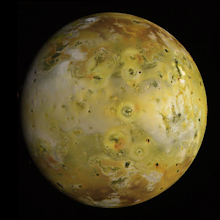
Anyways, like many of my fellow netizens, I have created some parody videos, this time advertising the exploration of Io, based on the Old Spice ads. Enjoy!
Showing posts with label Youtube. Show all posts
Showing posts with label Youtube. Show all posts
Monday, July 19, 2010


Monday, February 22, 2010
10th Anniversary of Galileo's I27 Encounter
 I almost completely forgot about this, but today (for another 2 minutes here) is the tenth anniversary of the Galileo spacecraft's I27 flyby of Io. This encounter occurred on February 22, 2000 and was the third of three flybys of Io that took place over a four-month period between October 1999 and February 2000. The closest approach altitude was 198 kilometers. It was the fourth Io flyby overall by Galileo (including the one right before orbit insertion) and took place during the spacecraft's 27th orbit of Jupiter. Galileo went on to perform three more flybys of Io between August 2001 and January 2002.
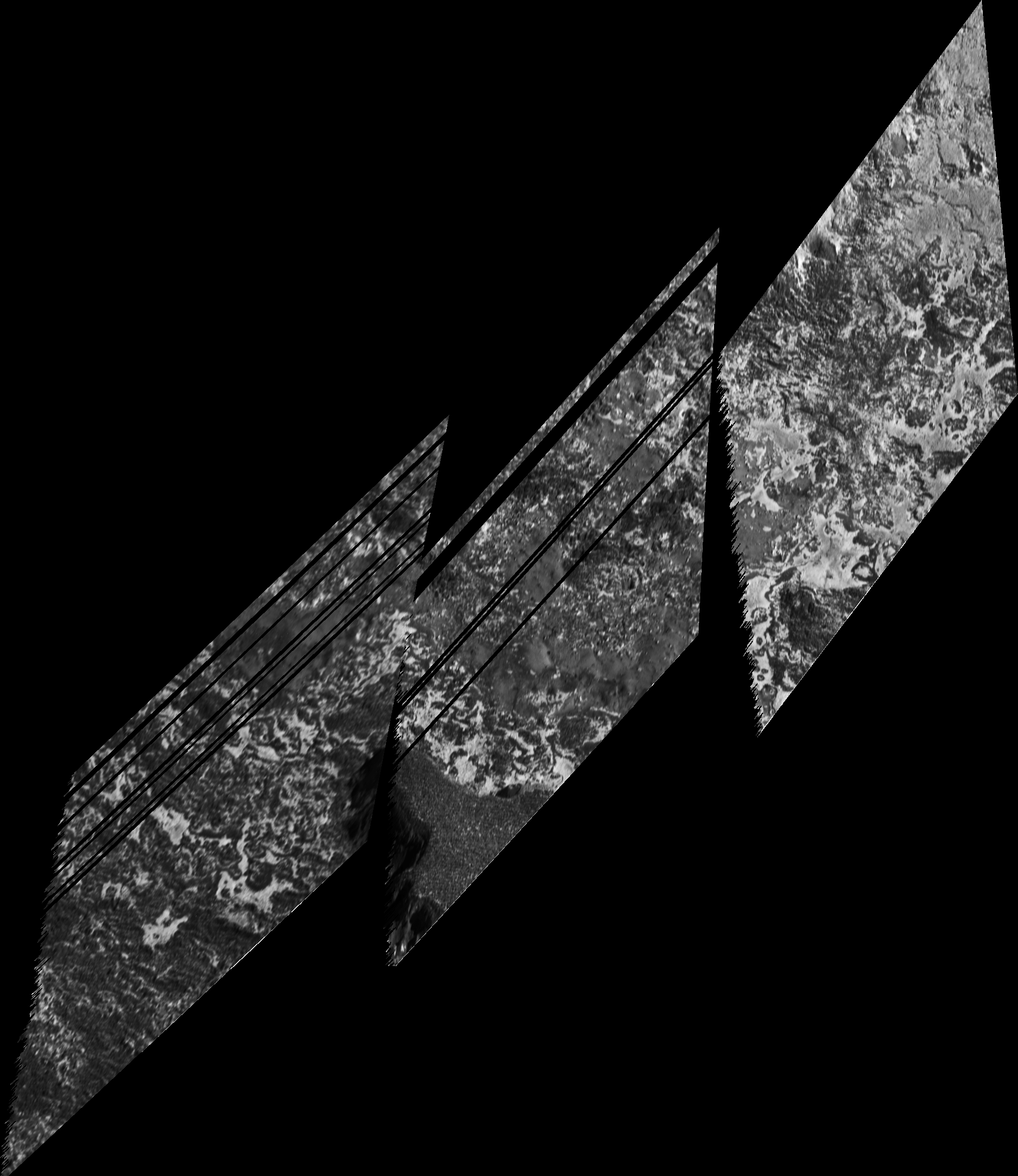
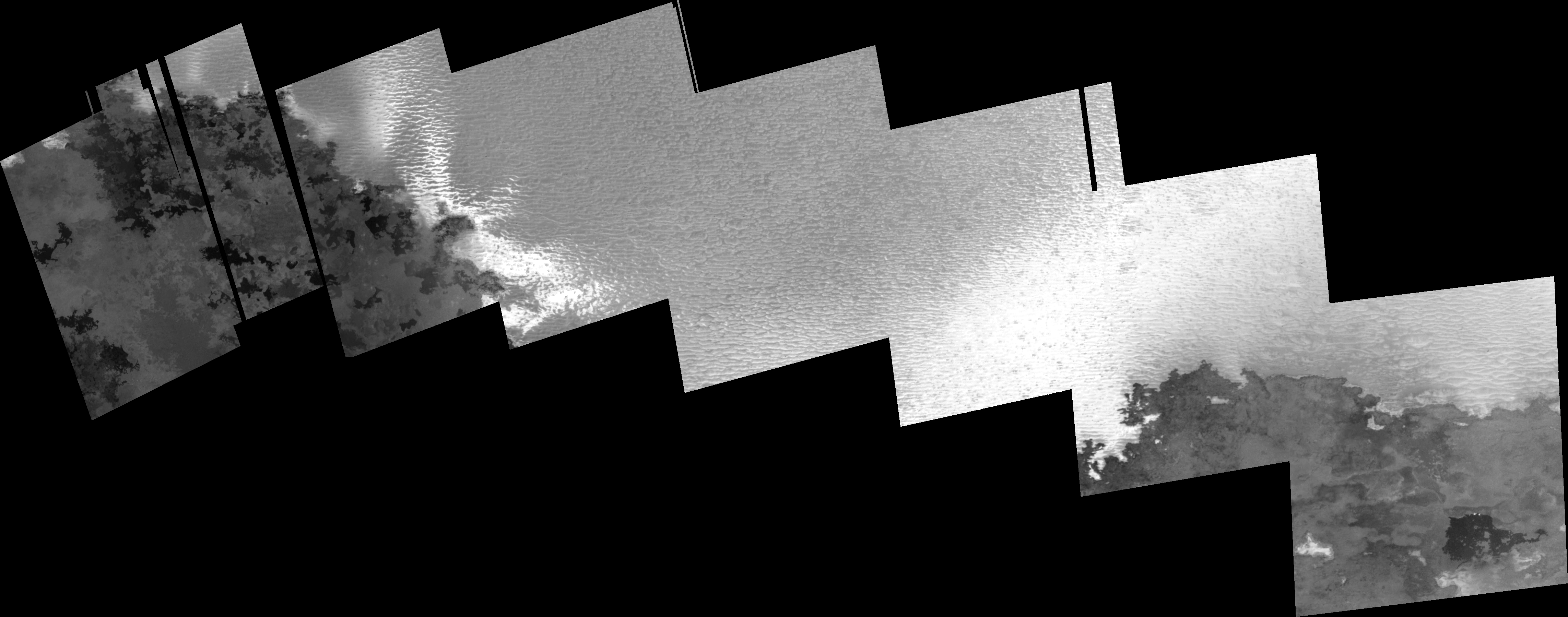
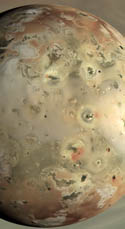
Compared to the first two flybys of this "Io campaign" section of the Galileo Europa Mission (the spacecraft's first extended mission), when spacecraft safe-mode events and instrument malfunctions limited the science return, the I27 flyby was relatively problem free. All of the planned Io observations were acquired. However, this did caused problems when it came to playing all that data back, as more images were planned than could be downlinked with the expectation that some data might be lost due to some spacecraft malfunction, like the other two encounters. In which case, mission planner carefully selected which data to playback, in some cases skipping entire frames or only playing back a portion of others. That was the case for the CHAAC_01 observation, a very high-resolution mosaic across Chaac Patera (a portion of which is shown above). Another good example is the SOPOLE01 observation, a four-image, medium resolution mosaic that covered the southern mid-latitudes of the anti-Jupiter hemisphere, where only the first frame over Telegonus Mensae was played back in close to its entirety, while two others had 100 lines out of 800 played back. These kinds of limits were seen in many of the SSI observations from this flyby, and that's even with three months between I27 and the next flyby, this time of Ganymede, G28.
For the other instruments on Galileo, I27 was a very exciting, with high resolution, Near-Infrared observations of Pele, revealing the location of the majority of the volcanoes thermal emission (which would be targeted by the camera in October 2001), coverage over the Chaac Patera and Camaxtli Patera region, which led to a confirmation of the connection between dark patera floor terrain and thermal emission as well as a patera covered in nearly pure sulfur dioxide ice (Balder Patera), and observations of the Prometheus and Amirani flow fields, showing the detailed thermal structure of these features.
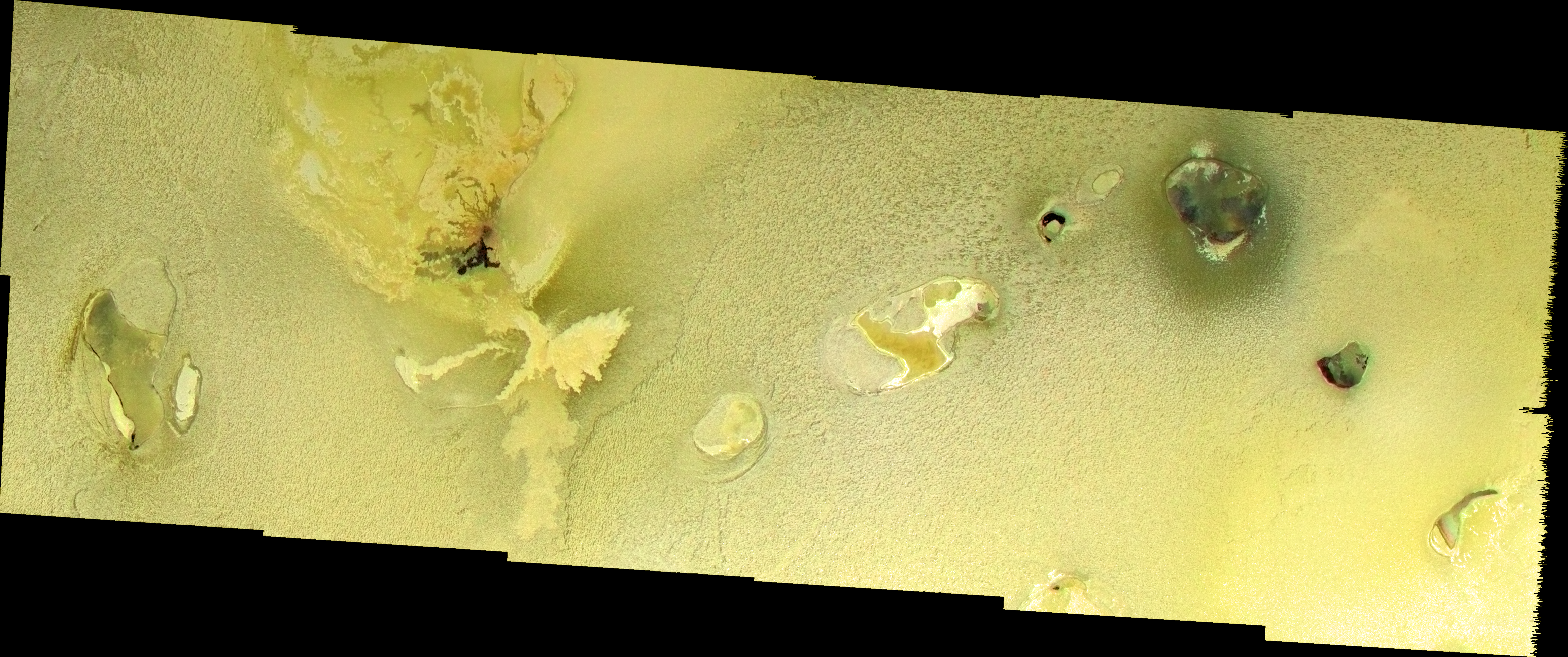
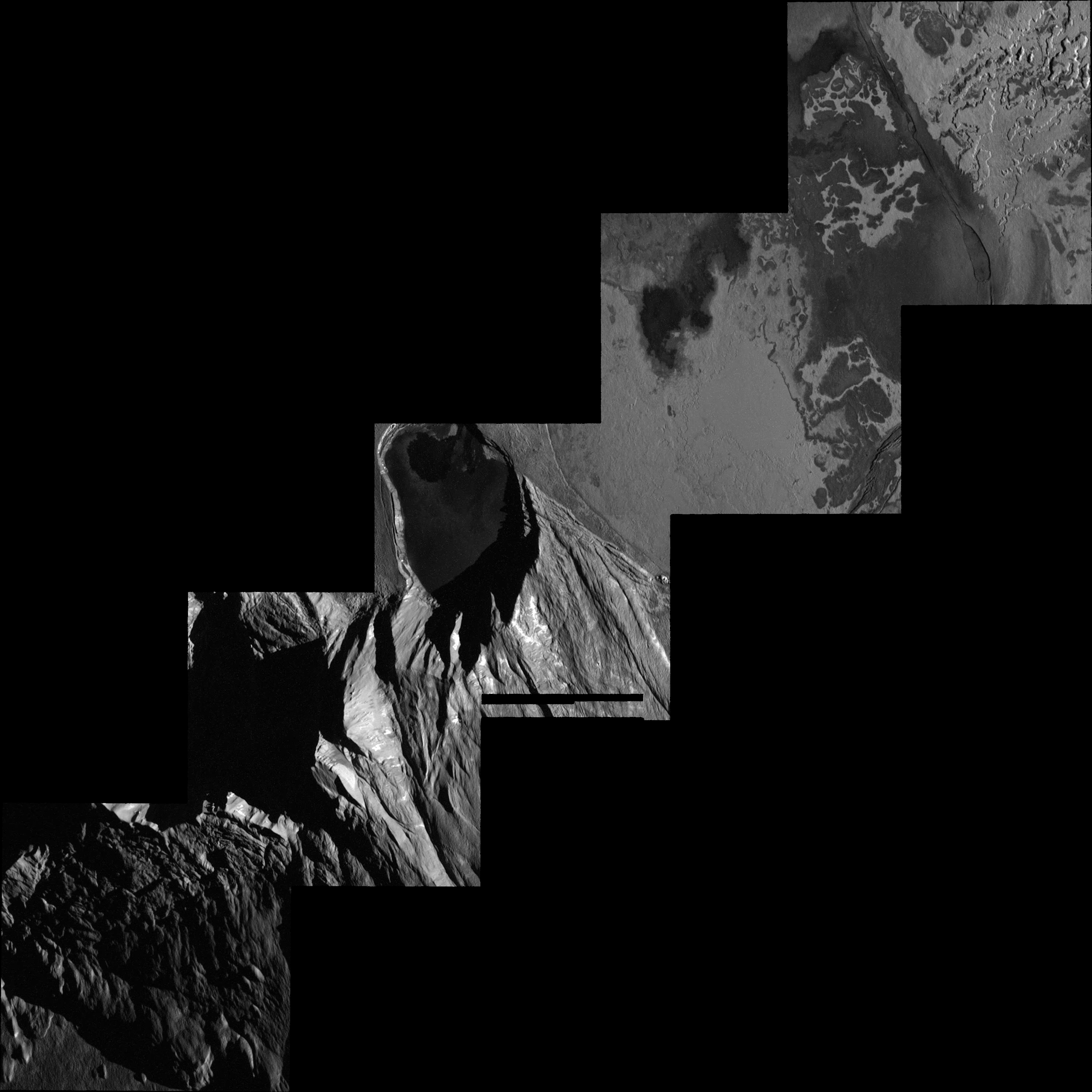
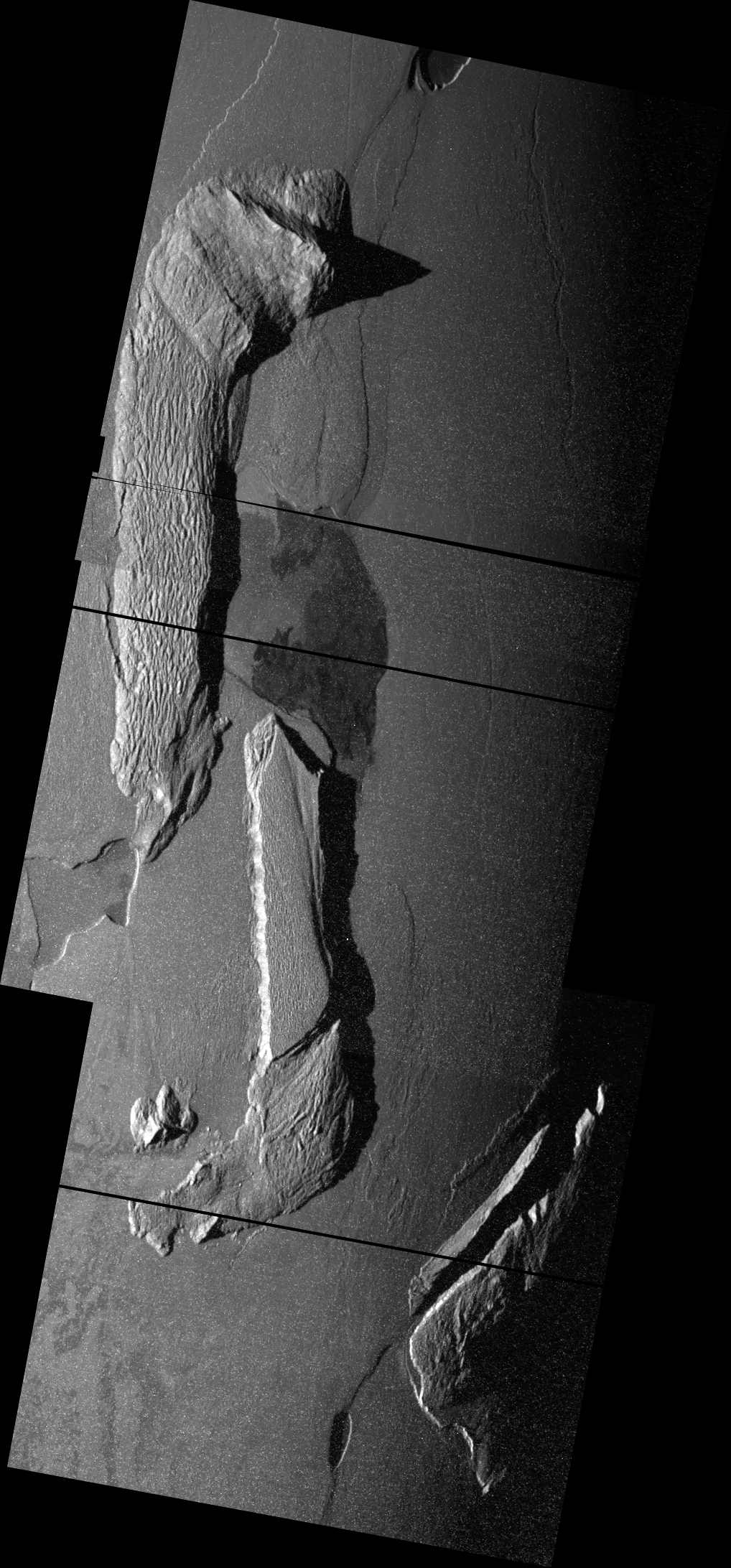
For the camera, check out my I27 image page to see the images Galileo took during the flyby. Among the highlights include the highest resolution images acquired of Io (covering layered terrain in Bulicame Regio, broken up by a dark promontory, a jagged fissure, boulders, and sapping channels), a 12-frame mosaic over the Chaac-Camaxtli region, and a high-resolution mosaic across the Prometheus flow field and the hummocky terrain that surrounds it. Mosaics of the Amirani and Prometheus lava flow fields showed changes since they were imaged in October 1999, providing the first direct measure of the lava coverage rate at these two prominent features. So even though many images were only partially played back or not played back at all, an amazing array of gorgeous terrain is seen in the images that were returned.
With that, I want to leave you with a nice simulation from Celestia showing an animation of the I27 flyby (note the fly over of the Zamama plume):
Link: Galileo I27 Images [pirlwww.lpl.arizona.edu]
Sunday, February 21, 2010
Animation of the Jupiter Europa Orbiter's Four Io Flybys
Yesterday, while finishing up work on the Exploration of Io article on Wikipedia and looking for a graphic for the Jupiter Europa Orbiter (JEO), I noticed that a SPICE trajectory file for JEO had been posted online. The Jupiter Europa Orbiter is NASA's portion of the Europa/Jupiter System Mission approved last year. I can use the SPICE kernel to display the position of the spacecraft at a given time in Celestia. The trajectory file covers the Jupiter tour portion of the current mission baseline, though obviously a number of factors between now and the arrival of JEO at Jupiter will cause changes to this baseline, including changes in the launch date (assumed as February 2020 with an arrival at Jupiter in December 2025). So, as of right now, these provide more of an example of the types of flybys JEO can perform at Io.
I've created a little video and uploaded it to Youtube with animations from Celestia simulating each of the four Io flybys in the current tour. You can see some of the highlights from each encounter, though note that no science is planned for the first encounter (Io-0) as it takes place right before JEO's all-important, Jupiter Orbital Insertion burn. For Io-1, on July 9, 2026, JEO passes almost directly over the Amirani plume, and depending on how high gases from the volcano reach, it could directly sample the composition of it. JEO can also image the north polar region of Io from an oblique angle. However, Amirani's plume is ~75 km tall, while the altitude for Io-1 is 300 km. For Io-2, on September 3, 2026, JEO should be able to image the Pele volcano and south polar region at high resolution. In the latter case, this is the section not covered by Voyager 1 at medium resolution. The Zamama, Marduk, Prometheus, and Pele plumes will also be visible along the bright limb near C/A. Finally, for Io-4, JEO will pass directly over Tohil Mons providing a chance to obtain laser altimetry over a mountain we have pretty good stereo coverage already, providing a useful comparison.
I wrote up a more detailed article on the potential science from each of these encounters last February.
I hope you all enjoy! I should point out that this video was uploaded at 720p so you can view it in high-definition, and this definitely works better if you view it full screen.
Link: Animation of the Jupiter Europa Orbiter's Four Io Flybys [www.youtube.com]
I've created a little video and uploaded it to Youtube with animations from Celestia simulating each of the four Io flybys in the current tour. You can see some of the highlights from each encounter, though note that no science is planned for the first encounter (Io-0) as it takes place right before JEO's all-important, Jupiter Orbital Insertion burn. For Io-1, on July 9, 2026, JEO passes almost directly over the Amirani plume, and depending on how high gases from the volcano reach, it could directly sample the composition of it. JEO can also image the north polar region of Io from an oblique angle. However, Amirani's plume is ~75 km tall, while the altitude for Io-1 is 300 km. For Io-2, on September 3, 2026, JEO should be able to image the Pele volcano and south polar region at high resolution. In the latter case, this is the section not covered by Voyager 1 at medium resolution. The Zamama, Marduk, Prometheus, and Pele plumes will also be visible along the bright limb near C/A. Finally, for Io-4, JEO will pass directly over Tohil Mons providing a chance to obtain laser altimetry over a mountain we have pretty good stereo coverage already, providing a useful comparison.
I wrote up a more detailed article on the potential science from each of these encounters last February.
I hope you all enjoy! I should point out that this video was uploaded at 720p so you can view it in high-definition, and this definitely works better if you view it full screen.
Link: Animation of the Jupiter Europa Orbiter's Four Io Flybys [www.youtube.com]
Wednesday, January 6, 2010
New Videos Showing Topography in the Jupiter System
Paul Schenk has posted some new, high-definition videos on Youtube showing the topography of various surface features across the four Galilean satellites. These videos were created for a conference/celebration going on in Padua starting today, the IAU Symposium 269: Galileo's Medicean Moons - Their Impact on 400 Years of Discovery. Schenk's videos can be found online at his Youtube channel, GalSat400. These videos are based on photoclinometry and stereo imaging derived from Galileo images. Photoclinometry uses changes in the topographic shading of a features to determine local slopes, and thus topography. Stereo imaging uses pairs of images taken at different viewing angles to determine topography. The latter example are often depicted as stereo pairs or anaglyphs. For Io, these videos include flyovers of Tohil Mons based in part on a high-resolution mosaic of mountain from Galileo's flyby of Io during orbit I32, Hi'iaka Montes from I25 data, and the Pillan flow field from I24 data (not posted yet but I definitely look forward to Paul getting that online). For your convenience, those videos are also below. Paul has also post videos using high-resolution Galileo mosaics for the other Galileans. Of these other videos, I kinda like the flyover of Manannan crater on Europa. This relatively small impact crater looks crater-ish from a distance, but up close, when you look a the topography of the feature, you can see that the thin ice shell and ductile layers of that shell have mangled that crater out of all recognition.
Definite check these videos out!
Tohil Mons, Io (high-resolution)
Liftoff from Hi'iaka Montes
Link: Youtube - GalSat400's channel [www.youtube.com]
Link: Galileo and Padova - 1610-2010 Celebration (New Videos) [stereomoons.blogspot.com]
Definite check these videos out!
Tohil Mons, Io (high-resolution)
Liftoff from Hi'iaka Montes
Link: Youtube - GalSat400's channel [www.youtube.com]
Link: Galileo and Padova - 1610-2010 Celebration (New Videos) [stereomoons.blogspot.com]
Tuesday, October 13, 2009
Animation of Galileo's I24 Flyby of Io
Over the last few days we've been looking back at the Galileo's October 11, 1999 flyby of Io that occurred ten years ago this past Sunday. We've looked at the planning that went into the science observations as well as some of the issues encountered during flyby. Today, I wanted to present a video I created using Celestia and edited in Adobe Premiere Pro. This combines a simulation of the flyby with some of the actual data that was returned during each observation. And by ALL MEANS, full-screen this video!
The music used in this video is by _Ghost from ccMixter.com. The two samples used, Ice and Chilli and Low (Ghostrust Reflection), are available under the Creative Commons NonCommercial Sampling Plus 1.0 license.
I had hoped to have this animation done yesterday, but what are you going to do? I hope you all enjoy!
Link: Galileo's I24 Flyby of Io [www.youtube.com]
The music used in this video is by _Ghost from ccMixter.com. The two samples used, Ice and Chilli and Low (Ghostrust Reflection), are available under the Creative Commons NonCommercial Sampling Plus 1.0 license.
I had hoped to have this animation done yesterday, but what are you going to do? I hope you all enjoy!
Link: Galileo's I24 Flyby of Io [www.youtube.com]
Wednesday, July 22, 2009
July 22 Eclipse of Io by Ganymede
Later this morning, Io's trailing hemisphere will experience a total solar eclipse when Ganymede passes between Io and the Sun. The eclipse runs roughly from 13:34 to 13:39 UTC (14:08-14:14 UTC as seen from Earth). The video below was created in Celestia and shows the eclipse both from above Io, showing the shadow of Ganymede cross Io's surface, and from the surface of Io, showing Ganymede pass in front of the Sun.
Computer Animation of the total eclipse of the Sun by Jupiter's moon Ganymede over the trailing hemisphere of Io on July 22, 2009. First half shows a view from 4500 miles above Io's trailing hemisphere. Second half zooms in on the sun from an unnamed volcanic pit showing the total eclipse. The animation runs from 13:30 to 13:40 UTC on July 22, 2009.
EDIT 07/22/2009 10:06 AM: Fixed the title of the article, changing Jupiter to Ganymede. Obviously, a Jupiter eclipse is nothing special. A Ganymede one is.
Computer Animation of the total eclipse of the Sun by Jupiter's moon Ganymede over the trailing hemisphere of Io on July 22, 2009. First half shows a view from 4500 miles above Io's trailing hemisphere. Second half zooms in on the sun from an unnamed volcanic pit showing the total eclipse. The animation runs from 13:30 to 13:40 UTC on July 22, 2009.
EDIT 07/22/2009 10:06 AM: Fixed the title of the article, changing Jupiter to Ganymede. Obviously, a Jupiter eclipse is nothing special. A Ganymede one is.
Tuesday, July 14, 2009
Ganymede Eclipse on Io Wednesday Morning
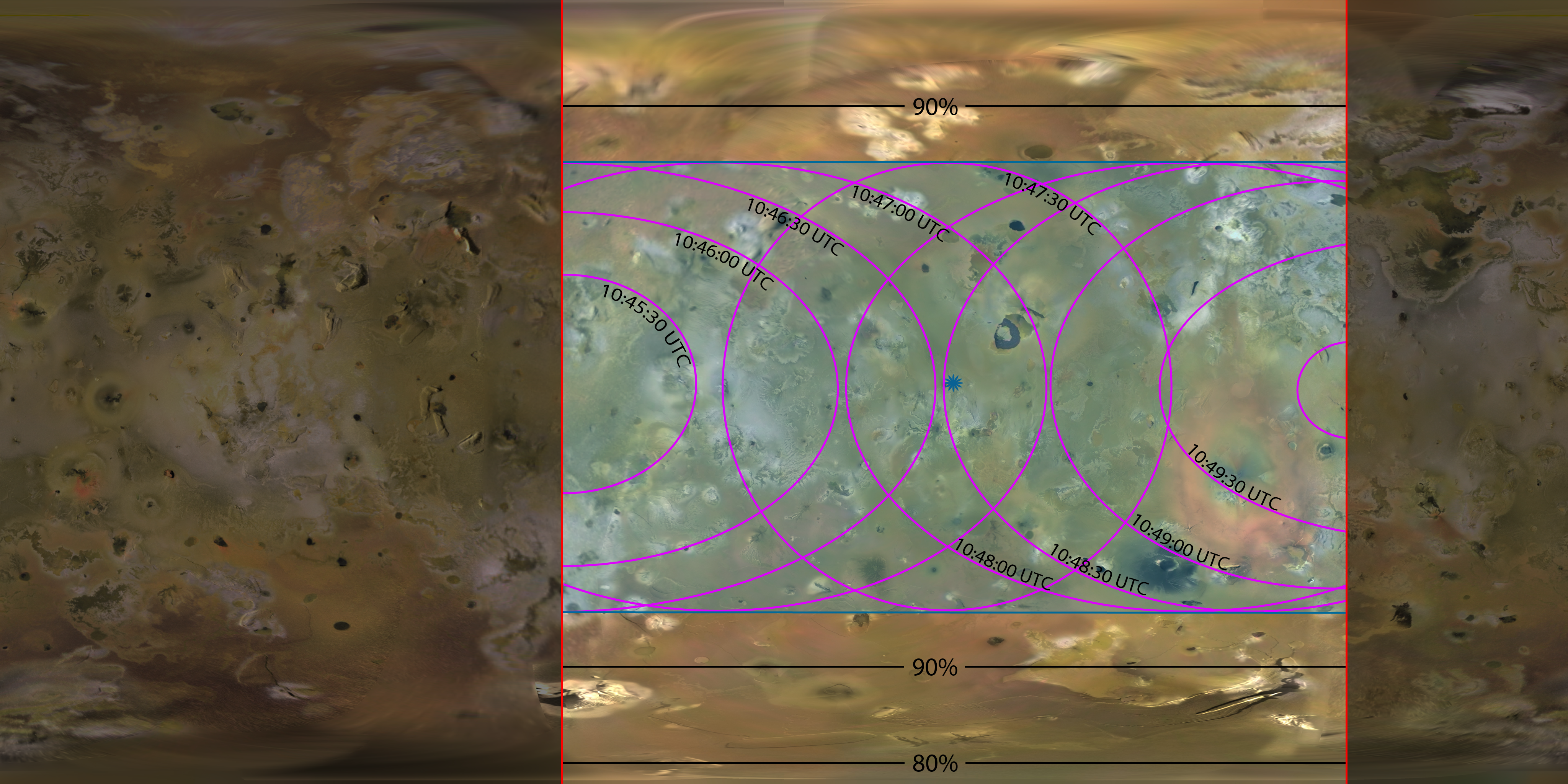
 Tomorrow brings Io's most interesting eclipse this mutual event season as most of Io's trailing hemisphere (51° West-231° West) is plunged into darkness by Jupiter's largest moon, Ganymede. This is the culmination of a series of weekly eclipses by Ganymede on Io. With each weekly eclipse, the center of Ganymede's shadow appears further south on Io. Tomorrow, the center of Ganymede's shadow passes just north of Io's equator. The eclipse takes place tomorrow morning, July 15, between 10:45 and 10:50 UTC (3:45-4:50 MST) on Io. If you have a good telescope and want to try to observe this event, from Earth the penumbral shadow of Ganymede will reach Io at 11:19 UTC, totality will run from 11:21 to 11:25:28 UTC, and end of the eclipse comes at 11:27 UTC. The peak of the eclipse, as observed from Earth, comes at 11:23:14 UTC. The timing of this eclipse should make it a good observation target for observers in the western United States, western South America (like the European Southern Observatory), and Hawaii.
During the eclipse, Ganymede will appear 13' 17.2'' across in Io's sky (compared to our moon, which appears around 30' across in Earth's sky). The sun will appear 6' 19.9". Therefore, it is unlikely that the sun's corona would be seen during the eclipse except near the beginning and end. At its peak near Tol Ava Patera, the eclipse will last 1 minute and 55 seconds long.
For this eclipse, I've created a little fancier video using Celestia and Adobe Premiere. I think I am starting to get along with that latter software package...
Computer Animation of the total eclipse of the Sun by Jupiter's moon Ganymede over the trailing hemisphere of Io on July 15, 2009. First half shows a view from 4500 miles above Io's trailing hemisphere. Second half zooms in on the sun from east of Ra Patera showing the total eclipse. The animation runs from 10:40 to 10:55 UTC on July 15, 2009.
I have also created a nice map showing the area on Io that will experience this eclipse. You can download a full-res version here.
 My post last year on this mutual event season should help provide some information on the science of these types of eclipse as well as occultations.
Thursday, July 9, 2009
30th Anniversary of the Voyager 2 Flyby of Jupiter
 Thirty years ago today, on July 9, 1979, the Voyager 2 spacecraft encountered Jupiter from a distance of 650,000 kilometers about its cloudtops, marking the second Voyager project flyby of the planet. The encounter provided an opportunity to see the anti-Jupiter hemispheres of Ganymede and Callisto, to monitor changes on Jupiter and Io since the Voyager 1 encounter four months earlier, and to observe Europa up close for the first time.
Back in March, we took an extensive look at the Voyager 1 encounter with Jupiter and Io. The Voyager 1 flyby provided a revolution in our understanding of the giant planet and turned the four Galilean satellites from mere points of light we were only beginning to understand into four separate worlds, each with their own unique geologies. In particular, during the Voyager 1 encounter, active volcanism was observed on Io as well as a narrow ring around Jupiter.
 For Io, the second Voyager encounter did not provide the same revolution in our understanding of that world; the clear star of the July 9 encounter was the cracked world of Europa. While Voyager 1 flew within 20,000 kilometers of Io on March 5, 1979, Voyager 2's trajectory kept the spacecraft outside Europa's orbit and, with Io on the other side of Jupiter during closest approach, Voyager 2 never came close than 1,128,000 kilometers of Io. However, the discovery of active volcanism on Io by Voyager 1 necessitated a change in the schedule of observations for the second encounter, including a 8-hour long sequence of images of a narrowing crescent Io as Voyager 2 receded from Jupiter. This prolonged observation sequence allows Voyager 2 to monitor volcanic plumes along Io's limb, including those at Amirani, Maui, and Loki. From observations such as these, Voyager 2 found that most of the plumes first observed by Voyager 1 were still active during the July 1979 encounter. Only Pele appeared to have shut down, though later observations by Hubble, Galileo, and other spacecraft seem to suggest that the Pele plume is intermittently active. Volund was not observed near the limb of Io during the Voyager 2 encounter, so it could not be determined if that plume was still active.
 Earlier, Voyager 2 had observed Io while it was more illuminated by the Sun, like the image at left. The goal of these observation was to search for surface changes on Io as the result of volcanic activity between the two Voyager encounters. Among the changes observed were two new plume deposits surrounding Surt (probably active during a short, intense eruption in June 1979, but Surt was not viewed near the limb by Voyager 2 to see if it was still active) and Aten Patera. The presence of these changes from large plumes but without the observation of the plumes associated with them have led to the conclusion that large, Pele-type plumes tend to be short-lived compared to more persistent, smaller dust plumes like at Prometheus. Additional surface changes included a larger dark area within Loki Patera, the result of overturning of more surface area of the lava lake that covers much of Loki, and a change in the shape of the Pele plume deposit, from a heart shape to an oval. Subtle changes in the shape and intensity of the Pele plume deposit were also observed by Galileo in the late 1990s and early 2000s.
 Of course, Io wasn't the only world Voyager 2 observed during its encounter 30 years ago. The star of the show was Europa. Europa was poorly observed during the previous Voyager encounter so this one really provided a great leap in our understanding of this icy world. Like Ganymede, Europa's surface was dominated by tectonic structures, ridges and dark, linear bands that criss-cross the surface. Unlike Ganymede, Europa's surface was found to be quite young with very few impact craters, though enough to show that the satellite's surface was much older than Io's. Spectral measurements suggesting a water ice surface, mass estimates between that of Io and Ganymede, and youth surface age soon led to the suggest that just beneath Europa's ice shell lay a liquid water ocean that today is a main focal point for exploration in the Jupiter system.
Voyager 2 never got the same amount of attention that the earlier Voyager 1 encounter did. During the same week, Skylab was slowly approaching its destruction over Australia, dampening press interest in the encounter, along with the perception that this encounter was covering similar territory as the previous one. But Voyager 2 provided an opportunity to follow up on the discoveries made by Voyager 1 by allowing for an adjustment to the observation plan, such as to monitoring Io's volcanic plumes and Jupiter's narrow ring system as Voyager 2 receded from the giant planet. Voyager 2 also allowed imaging scientists to fill out the global map of Ganymede and Callisto by observing their anti-Jovian hemisphere and providing the first close-up look of Europa. The Voyager 2 encounter unfortunately also began a 17-year gap in close-up spacecraft imaging of the Jupiter system. But Voyager 2 went on to bigger and better things, including doing followup observations of the Saturn system in August 1981 as well as our only encounters of Uranus and Neptune in 1986 and 1989, respectively.
For this post, I have posted some movies on Youtube created in Celestia showing the geometry of this encounter:
- Voyager 2 Trajectory through the Jupiter System
- Animation of Io as seen from Voyager 2 in July 1979
- Animation of Io as seen from Voyager 2 in July 1979 - Short Version
Saturday, June 20, 2009
Today's Eclipses of Io by Callisto
Here are two videos showing today's total eclipses of the Sun by Callisto on Io's south polar region:
Computer Animation of the first of two total eclipses of the Sun by Jupiter's moon Callisto over the south polar region of Io on June 20, 2009. First half shows a view from 7,317 km above Io's southern trailing hemisphere. Second half zooms in on the sun from near Kurdalagon Patera showing the total eclipse. The animation runs from 04:10 to 04:56 UTC on June 20, 2009.
Computer Animation of the second of two total eclipses of the Sun by Jupiter's moon Callisto over the south polar region of Io on June 20, 2009. First half shows a view from 7,317 km above Io's southern trailing hemisphere. Second half zooms in on the sun from near Svarog Patera showing the total eclipse. The animation runs from 08:40 to 09:20 UTC on June 20, 2009.
An earlier partial eclipse occurred on June 19 over Io's southern leading hemisphere as well.
Computer Animation of the first of two total eclipses of the Sun by Jupiter's moon Callisto over the south polar region of Io on June 20, 2009. First half shows a view from 7,317 km above Io's southern trailing hemisphere. Second half zooms in on the sun from near Kurdalagon Patera showing the total eclipse. The animation runs from 04:10 to 04:56 UTC on June 20, 2009.
Computer Animation of the second of two total eclipses of the Sun by Jupiter's moon Callisto over the south polar region of Io on June 20, 2009. First half shows a view from 7,317 km above Io's southern trailing hemisphere. Second half zooms in on the sun from near Svarog Patera showing the total eclipse. The animation runs from 08:40 to 09:20 UTC on June 20, 2009.
An earlier partial eclipse occurred on June 19 over Io's southern leading hemisphere as well.
Monday, June 15, 2009
Eclipses of Io by Ganymede on June 16
Tomorrow (June 16), Io will experience three solar eclipses by its larger neighbor, Ganymede. Like those that took place last week, these eclipses are mostly visible over the north polar region of Io, though totality could be observed much further south than those last week (I say could because, obviously, no one is there to experience them). Luckily, thanks to software like Celestia, we don't have to let a little thing like a few hundred million kilometers stop us. Below is a video of an eclipse over the northern part of Io's anti-Jovian hemisphere that will take place in about three hours (1:08 am MST). Yes, like the nerd I am, I will watch it live on Celestia...
And completely off topic for a second, I know I have a few Iranian readers. All I want to say is good luck and stay safe! The world is pulling for ya!
In addition to this eclipse, there was an eclipse a few hours ago (5:52 pm MST) over the northern leading hemisphere and there will be one later on June 16 (3:39 pm MST) over the northern trailing hemisphere.
And completely off topic for a second, I know I have a few Iranian readers. All I want to say is good luck and stay safe! The world is pulling for ya!
In addition to this eclipse, there was an eclipse a few hours ago (5:52 pm MST) over the northern leading hemisphere and there will be one later on June 16 (3:39 pm MST) over the northern trailing hemisphere.
Impact mini-series on ABC: Oh the stupidity
My brain hurts now after this IQ damaging video. I mean, every scene, every scene in this trailer is just wrong, wrong in every way. Piece of brown dwarf?!? Hyper-mass?!? This is the kind of sci-fi I would expect if we were living in the world of the movie "Idiocracy". Though it may be worth watching this mini-series, premiering on ABC next Sunday, just for the camp value.
Sorry, I just had to share this video. I am not responsible for any damaged keyboards or monitors from your spit takes.
Tip of the hat to Phil Plait.
Monday, June 8, 2009
Another Total Eclipse by Ganymede Tomorrow
I completely forgot in my last post that there are TWO total solar eclipse by Ganymede tomorrow, in addition to the one around 08:50 UTC. The second, to occur around 18:50 UTC, will also cover the north polar region a little further to the west than the earlier eclipse, over the trailing hemisphere side of the north pole. Below is an animation of that eclipse:
Computer Animation of a second total eclipse of the Sun by Jupiter's moon Ganymede over the north polar region of Io on June 9, 2009. First half shows a view from 7,317 km above Io's northern trailing hemisphere. Second half zooms in on the sun from near the north pole showing the total eclipse. The animation runs from 18:30 to 19:15 UTC on June 9, 2009. This eclipse occurs nine hours after another total eclipse by Ganymede over a region to the east.
Computer Animation of a second total eclipse of the Sun by Jupiter's moon Ganymede over the north polar region of Io on June 9, 2009. First half shows a view from 7,317 km above Io's northern trailing hemisphere. Second half zooms in on the sun from near the north pole showing the total eclipse. The animation runs from 18:30 to 19:15 UTC on June 9, 2009. This eclipse occurs nine hours after another total eclipse by Ganymede over a region to the east.
Today's Eclipses of Io by Ganymede
With the Jupiter system approaching vernal equinox on June 22, eclipses of the Sun on Io by the other satellites in the Jupiter system and other mutual events (such as occultations, when one satellite passes in front of another from Earth's perspective) have been occurring for the last few months. Tonight, the first total eclipse of the Sun by Ganymede this mutual event season will take place. A partial eclipse by Ganymede also occurred just 30 minutes ago (another partial eclipse occurred on June 1 as well). Below are two animations created in Celestia showing these two eclipses. For more information, check out my blog post from December about the mutual event season as well as my 365 Days of Astronomy podcast from last month.
Computer Animation of a partial eclipse of the Sun by Jupiter's moon Ganymede over the north polar region of Io on June 8, 2009. First half shows a view from 7,317 km above Io's northern leading hemisphere. Second half zooms in on the sun from near Io's north pole showing the partial eclipse. The animation runs from 20:38 to 21:08 UTC on June 8, 2009.
Computer Animation of a total eclipse of the Sun by Jupiter's moon Ganymede over the north polar region of Io on June 9, 2009. First half shows a view from 7,317 km above Io's northern anti-jovian hemisphere. Second half zooms in on the sun from near the eastern end of Lei-Kung Fluctus showing the total eclipse. The animation runs from 09:30 to 10:15 UTC on June 9, 2009.
These eclipses by Ganymede will occur every 8 days between now and mid-August with the most spectacular Ganymede eclipse occurring on July 15 when most of the trailing hemisphere of Io will be in the shadow of Ganymede.
Computer Animation of a partial eclipse of the Sun by Jupiter's moon Ganymede over the north polar region of Io on June 8, 2009. First half shows a view from 7,317 km above Io's northern leading hemisphere. Second half zooms in on the sun from near Io's north pole showing the partial eclipse. The animation runs from 20:38 to 21:08 UTC on June 8, 2009.
Computer Animation of a total eclipse of the Sun by Jupiter's moon Ganymede over the north polar region of Io on June 9, 2009. First half shows a view from 7,317 km above Io's northern anti-jovian hemisphere. Second half zooms in on the sun from near the eastern end of Lei-Kung Fluctus showing the total eclipse. The animation runs from 09:30 to 10:15 UTC on June 9, 2009.
These eclipses by Ganymede will occur every 8 days between now and mid-August with the most spectacular Ganymede eclipse occurring on July 15 when most of the trailing hemisphere of Io will be in the shadow of Ganymede.
Tuesday, March 17, 2009
YouTube Videos of Galileo Flybys of Io
A couple of weeks ago, I uploaded a video showing an animation of Voyager 1's encounter with Io. I have gone ahead and uploaded animations showing the seven flybys Galileo made of Io between 1995 and 2002. These were created using Celestia, a 3D space simulation program that supports user-created add-ons. This is great because it is easy to modify the program to suit your needs, whether you want to create science fiction/fantasy worlds in a galaxy far, far away or model spaceflight events closer to home. I've modified my installed version so that it uses NAIF Spice kernels to produce accurate position information for all the planets and satellites in the solar system and many space probes, such as Galileo, Cassini, both Voyagers, Mars Reconnaissance Orbiter, MESSENGER, Dawn, and Pioneer 10 and 11. I have also modified it to include a high-resolution basemaps for Io and many other planets and moons. Here are the links to those videos on Youtube, plus an embedded version of the I33 video below.
In a few other quick notes, the presentations from last week's OPAG meeting still haven't been posted online, in case you are waiting for me to discuss them. As soon as they are, I will let you know here.
Astrophotography of Jupiter and its moons certainly have died down in recent months due to January's conjunction, when Jupiter was on the other side of the Sun from Earth, making it difficult to observe because Jupiter's been so close to the Sun. However, over the last few weeks, Jupiter has been reaching higher and higher in the sky, making it more visible in the morning sky. Tomio Akutsu in the Philippines captured a great view of Jupiter on March 7, also showing that Io is in fact, still in existence (in case there were any skeptics out there ;-)
- I0 - December 7, 1995
- I24 - October 11, 1999
- I25 - November 26, 1999
- I27 - February 22, 2000
- I31 - August 6, 2001
- I32 - October 16, 2001
- I33 - January 16, 2002
In a few other quick notes, the presentations from last week's OPAG meeting still haven't been posted online, in case you are waiting for me to discuss them. As soon as they are, I will let you know here.
Astrophotography of Jupiter and its moons certainly have died down in recent months due to January's conjunction, when Jupiter was on the other side of the Sun from Earth, making it difficult to observe because Jupiter's been so close to the Sun. However, over the last few weeks, Jupiter has been reaching higher and higher in the sky, making it more visible in the morning sky. Tomio Akutsu in the Philippines captured a great view of Jupiter on March 7, also showing that Io is in fact, still in existence (in case there were any skeptics out there ;-)
Wednesday, January 28, 2009
Random Thoughts from the Aether
Here is a quick round-up of random items from the web that you all might find interesting:
- Van Kane has published on his blog, Future Planetary Exploration, his thoughts on the Outer Planet Flagship mission proposals. Like, it looks like he would fine with either one being selected and shares some of my opinions. For example, one of the reasons I (barely) prefer the Europa Jupiter System Mission is that it seems to do a lot more broad science of the entire Jupiter system, including Europa, whereas the Titan mission focuses primarily on Titan and Enceladus. The Titan mission though has some amazing plans, such as the hot-air balloon and the boat.
- Yesterday's 365 Days of Astronomy Podcast has a nice overview of Jupiter's Great Red Spot.
- The Detailed mission studies for the two flagship mission proposals have not been released yet, so stop asking me.
- There are a few great videos of the annular eclipse the other day. This one is my favorite.
Monday, December 29, 2008
The Webcam vs. The Particle Accelerator
I was alerted to this video by Emily Lakdawalla on her Planetary Society Blog and ilbasso on Unmannedspaceflight.com. It shows the effects of a beam from a proton particle accelerator on a poor, helpless webcam. These effects are analogous to those seen in spacecraft photos due to the impact of cosmic rays and charged particles on spacecraft camera CCDs. During processing these noise hits are removed, though some, like the streaks and snow effect shown in the video, often need to be removed by hand.
An example of one I worked on was a sequence of images of Saturn's moon Epimetheus acquired last year. These images were some of the highest resolution images that will be taken of this moon during the Cassini mission. The images were acquired when Cassini was between the E and G rings, where charged particle radiation was highest and its effect on the images taken can be seen in the raw data. With the help of noise filtering, manually removing stubborn streaks and noise "blobs", and summing multiple images together to improve signal-to-noise, I managed to create a cleaned-up, final product.
Noise hits from charged particle radiation are also a problem with Io images. Io orbits within one of Jupiter's most intense radiation belts: the Io Plasma Torus. Particles from this radiation belt, composed of electrons and heavy ions like sulfur, oxygen, and sodium, can produce noise in images and affect other electrical systems on a spacecraft (like causing safing events, damaging the summation mode of a camera and the grating of a spectrometer).
An example of one I worked on was a sequence of images of Saturn's moon Epimetheus acquired last year. These images were some of the highest resolution images that will be taken of this moon during the Cassini mission. The images were acquired when Cassini was between the E and G rings, where charged particle radiation was highest and its effect on the images taken can be seen in the raw data. With the help of noise filtering, manually removing stubborn streaks and noise "blobs", and summing multiple images together to improve signal-to-noise, I managed to create a cleaned-up, final product.
Noise hits from charged particle radiation are also a problem with Io images. Io orbits within one of Jupiter's most intense radiation belts: the Io Plasma Torus. Particles from this radiation belt, composed of electrons and heavy ions like sulfur, oxygen, and sodium, can produce noise in images and affect other electrical systems on a spacecraft (like causing safing events, damaging the summation mode of a camera and the grating of a spectrometer).
Friday, April 25, 2008
Another Video from Youtube
I missed this last night while looking for Io videos on Youtube. It is made by the same folks who couldn't get a decent CGI Io going, but this is a lot more informational with interviews with various scientists who participated in the Voyager and Galileo missions. Not bad, a few minor errors that only people like myself would notice (nothing groan worthy that I noticed).
Io on Youtube
Continuing my series on Io resources online, today we look at Io on the world's largest video sharing website, Youtube. To be honest, I am not a big Youtube user, visiting the site maybe a few times a month. Most of the videos on the site just aren't all that interesting to me, or are clearly aimed at an audience that I am not part of. But still there are a few interesting Io-related videos on Youtube:
UPDATE 09/24/2008: I updated this post with a new url for the Io Song.
- The one above is perhaps my favorite, the history of Io in song form, complete with accordion and mandolin.
- A video from the Europan propaganda machine (with Bill McKinnon)
- Video Podcast from the New Horizons flyby showing the reaction of Hal Weaver, Andy Cheng, and John Spencer to the first images down of Io - Part 1 and Part 2.
- There is a nice clip from a BBC "documentary" called Voyage to the Planets with a segment on Io. Worst. Fake. Io. Ever! First, what dumb idiot would land on a lava flow? The fact that you landed near a fracking skylight should have told you something, but no... Second, I may have missed that part of my Physics classes, but I seem to recall something about light (and that includes TV transmissions from the surface of Io) taking an hour or so to go from Io to Earth... Am I the only one who is hoping for either A) Radiation sickness striking "I don't need my anti-radiation pills" Zoe or B) that the ground opens up beneath "Hmm, this crusted over lava flow looks like a nice place to land" Zoe? Don't go toward the light!
- The theatrical trailer for Outland
- Message from Io - Another Io song
UPDATE 09/24/2008: I updated this post with a new url for the Io Song.
Subscribe to:
Posts (Atom)


 Posts
Posts